What I read in 2025
In 2025, I ended up reading 43 books. Just like every year, it is time to summarize and reflect on all the books.
My six favorite (☆) books of the year were:
- Lord of the Flies (2.)
- Life 3.0 (8.)
- Guns, Germs, and Steel (13.)
- The Methods of Rationality (14.)
- Normal People (23.)
- The Emperor of All Maladies (36.)
Compared to the previous years, I ended up reading significantly more fiction this year, resulting in a somewhat equal ratio to non-fiction books. That was not something I expected when 2025 started, but I ended up really re-discovering fiction for me, particularly books that describe interesting relationships one can learn from.
1. Wild Chocolate
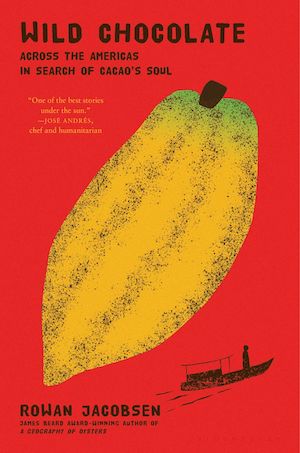
Even though cocoa beans originate from the rainforest in South and Central America, most of today’s cocoa production comes from West Africa, in particular from Ivory Coast and Ghana. Most of the chocolate we eat is produced from these cocoa beans, which are usually fairly uniform in kind since people ended up cultivating the ones that are easiest to grow and harvest. Using such uniformly grown cocoa beans unfortunately leads to less complex flavors in the final chocolate.
In Wild Chocolate, Rowan Jacobsen goes on a journey to find the last remains of wild chocolate in the rainforest. Some specialty chocolate makers have made it their mission to seek out these wild cocoa trees with the goal of producing more rich and complex tasting chocolate. However, finding such cocoa trees and harvesting the beans is not exactly easy, and can in all fairness be called an adventure.
I found the book to be super interesting. I enjoyed learning more about how chocolate is actually produced and it was fun to follow along on the search for wild chocolate. In particular since I started eating lots of dark chocolate, up to 100%, over the last year, it was cool to learn more about chocolate, and the book really made me want to try out some chocolate made from wild cocoa beans.
2. Lord of the Flies ☆
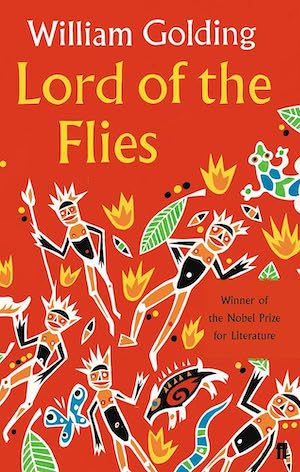
Lord of the Flies tells the fictional story of a group of kids and teenagers that survive a plane crash and end up stranded on a deserted island. The kids realize that they need to organize themselves until eventual help, hopefully, arrives. However, how exactly to do that is not entirely clear and different potential leaders and ways of running their mini society emerge.
I found the book to be absolutely brilliant. On one hand, it is just genuinely interesting to read about what the kids do and what they will find on the island. On the other hand, it was also really intriguing to see how the kids are trying to organize themselves and what the dynamics are like.
Besides just being interesting to read, I would also consider Lord of the Flies to be a really important book for people to read. I can totally see why many schools in English-speaking countries cover the book in class, and why the author eventually ended up winning a Nobel Prize in Literature.
3. How Will You Measure Your Life?
Clayton Christensen was a professor at the Harvard Business School and is particularly well known for first describing the innovator’s dilemma. In How Will You Measure Your Life?, Christensen talks about how to live a happy life that is filled with purpose. To achieve that, he transfers over many business concepts and explains how to apply them in a personal context.
I really enjoyed the book. It was super interesting to see how such seemingly business-focused concepts can also be applied to one’s personal life, and I also found Christensen’s life and his approach to things quite inspiring.
One idea that in particular stayed in my mind is carefully considering outsourcing. In the business world, there are of course well-known cases where outsourcing ended up badly, e.g. Western companies increasingly outsourcing manufacturing to Asian countries, and in the process forgetting, or not further developing, essential skills. However, the same concept can be applied to personal knowledge. For example, if a kid outsources various skills to you, that might be more efficient in the short term but has bad long-term consequences. Generally, you want to be mindful about outsourcing, and only do it for skills you definitely will not need in the long run.
4. Altered Traits
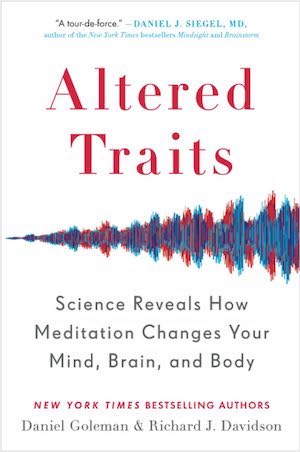
It is well known that meditation is a good practice for one’s mind. But how long do the positive effects of meditation last? Just during the meditation itself or does meditation lead to changes that last a long time? That’s exactly the question that Altered Traits discusses.
The book’s authors, Daniel Goleman and Richard Davidson, have spent many decades scientifically studying meditation. Their results show that meditation can indeed lead to altered traits, i.e. long-lasting effects, not just short-lived, altered states. However, this is only the case when practicing regularly in certain ways.
I really enjoyed the book. It was cool to learn about the positive effects of meditation and to see how they are actually being studied. I also really liked that the authors were quite honest about shortcomings of their own, initial studies. Meditation is indeed not easy to study scientifically, since it is non-trivial to guard against the placebo effect, but the authors found some good practices to deal with these issues.
5. The Story of the Human Body
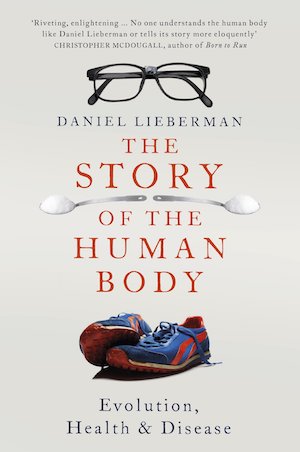
Daniel Lieberman is a professor of evolutionary biology at Harvard. In 2022, I had read his book Exercised, which I really enjoyed. The Story of the Human Body is another book from Lieberman, covering how the human body evolved over time, and what consequences this has when it comes to health and diseases.
In the book, Lieberman postulates the concept of mismatch diseases, i.e. illnesses that occur because of a mismatch between what people’s bodies are evolved for in contrast to how people actually live today. Type 2 diabetes is a typical example of such a mismatch disease. The human body evolved to crave sugar because it was incredibly hard to get for most of our evolution. However, today, sugar is abundant, and just listening to what we crave leads to a mismatch. This concept not only applies to type 2 diabetes but to many other modern health issues as well.
I really liked the book. Lieberman is a great writer and has lots of interesting things to share. However, it is worth noting that the book really spends most pages on how the human body evolved, and only a small part on what that implies for health and mismatch diseases today. Those topics are only covered in the last third of the book. That was a bit disappointing for me considering those topics were the reason I started reading the book.
6. Fortitude
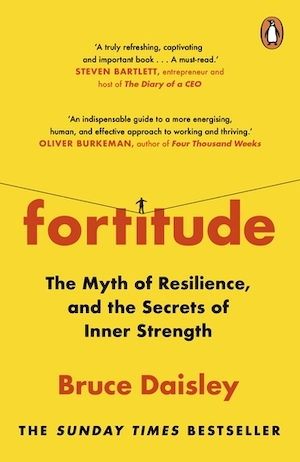
In the modern day and age, you can often read that it is important to develop resilience, i.e. the ability to bounce back from difficult events and to grow with them. In Fortitude, Bruce Daisley takes a closer look at what it actually means to be resilient and what the science says about resilience and experiencing difficult things.
Of course, it turns out that there are a lot of myths surrounding the topic. Not everyone that experiences traumatic events does develop resilience from them. And even the ones that do seem to exhibit resilience often struggle internally.
A set of studies that I found particularly noteworthy covered professional athletes. An astonishing number of elite athletes experienced traumatic childhood events and used sports as an outlet. Of course for every such athlete that succeeded in their sport, there are many traumatized kids that did not manage to find such an escape. And even for the elite athletes that did manage, a serious number of them still suffer from mental health issues today. So things are not all like they seem from the outside.
Besides these investigations, the author also shares some practical advice on what works, focusing on three particularly important aspects: having control and agency, being part of a community, and having a purpose. I found the advice to be sound, and all three dimensions really spoke to me. However, I also came away from the book a bit unsure; there is so much advice on resilience out there, as well as so much debunking of that advice.
7. Meditations
Marcus Aurelius was a Roman emperor about 2,000 years ago. Meditations is his personal journal, consisting of life lessons and guidance that he learned during his life. The book title should be read as “reflections” or “contemplation”, not as meditation as we understand it today. It is also worth noting that the book was not meant to be published. Rather, it was written in the form of a personal journal.
I found it incredible how timeless some of the advice in the book was. You can tell that Marcus Aurelius was an incredibly smart person and focused a lot on intellectual growth during his life. However, some of the advice does not quite transfer to today’s world, and some is really difficult to interpret in a meaningful way.
Lastly, it is worth noting that there are many translations into English available. I opted for one into modern English, which significantly simplified reading the book.
8. Life 3.0 ☆
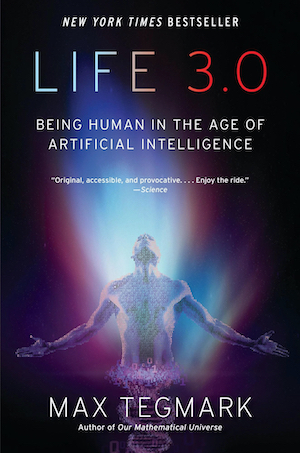
Max Tegmark is a professor of physics at MIT. In Life 3.0, he talks about artificial intelligence; how it might happen and what the consequences for people are. Nowadays, everyone is talking about AI, and it can be difficult to find actually novel thoughts on the topic, particularly for someone active in the field. Life 3.0 managed to really positively surprise me in that regard. I got exposed to so many new ideas.
The book is incredibly well-written, with many intriguing ideas on how AI might develop, how to think about AI safety, and how we will actually want to live with AI in the future. In particular, it was great how much the book made me reflect on things and what my preferred way of living with AI would actually be – it really is not that obvious.
I also thought it was super impressive that the book was written in 2017, just before the Transformer revolution started, at a time where models were still many orders of magnitude smaller, and web-scaling training was not yet commonly done. Despite this, most of the book still reads incredibly well now in 2025. In fact, if I would have had to guess the publishing date, I would’ve guessed late 2022, and the only reason I wouldn’t pick a later date is that there are no ChatGPT references and the term large language model is not used. The book really does transfer incredibly well to the AI space in 2025.
In my opinion, this book should be required reading for everyone working on AI.
9. The Art of Fermentation
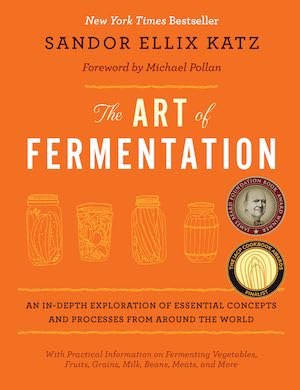
Around 1.5 years ago, I got really into fermented food, and started regularly consuming kimchi. Later on, I added kefir and other fermented food. Besides having a ton of health benefits, as explained in The Good Gut, fermented food is also just super tasty and can make dishes a lot more interesting.
To learn more about how to make fermented food myself, I read The Art of Fermentation. The book starts by explaining the fundamental concepts, and then provides detailed explanations and recipes for pretty much every fermented dish on this planet. Along the way, the author shares stories and letters that he received from readers. These were really fun to follow along.
When wanting to really learn well how to ferment food, this is the ideal book. It is incredibly detailed and covers an enormous amount of different fermented foods. It is also well written and fun to read – though I would caution that it is a fairly long and detailed book, and thus takes quite a while to really go through.
Now, after having read the book, I regularly make my own kimchi, kefir and yoghurt, and really enjoy doing so.
10. How to Not Die Alone
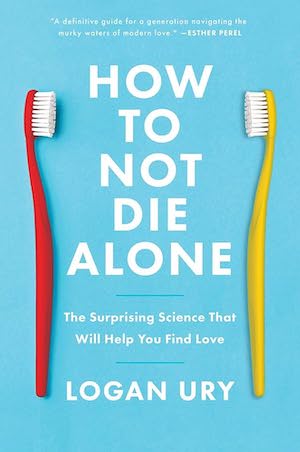
Logan Ury, the book’s author, is the head of relationship science at the dating app Hinge. Prior to that, she worked as a behavioral economist at Google and then as a dating coach. In How to Not Die Alone, she explains how to date right, how to deal with break-ups, how to find lasting love and what makes relationships grow over time. All of this is a mix of her own advice with what science, mostly psychology, has to say about these questions.
The book definitely has some great advice and I’m glad that I have read it. However, I really dislike the title of the book. It sounds too hyperbolic and dramatic, whereas the book itself has a much calmer, positive vibe.
11. Elements of Fiction Writing: Characters & Viewpoint
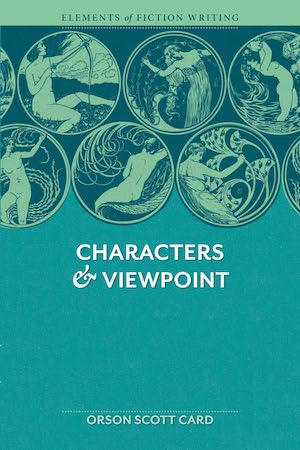
In Characters & Viewpoint, Orson Scott Card explains how to design characters. This covers questions such as what makes for a good character, how much background to give on them, and figuring out how you want them to impact your story.
Across the book, Card provides many examples of characters and stories, which are just a joy to read. It really helps that Card himself is a great author that is able to write rather elegantly. I also found it really enjoyable to think through how to design characters and found the book to be very creatively stimulating.
12. What the CEO Wants You to Know
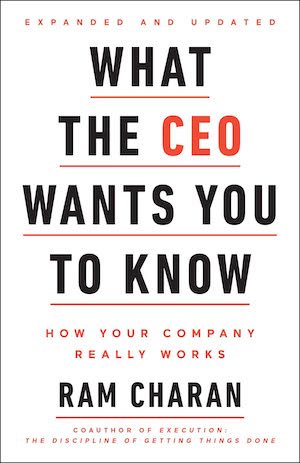
What the CEO Wants You to Know is a book that aims to describe how businesses work. To explain this, the author both discusses some fundamentals of economics, as well as many stories of actual companies.
I did not find it an overly enjoyable read. The economic fundamentals discussed are really that: absolute fundamentals. Besides that, I also did not get much value out of reading the stories of the author.
13. Guns, Germs, and Steel ☆
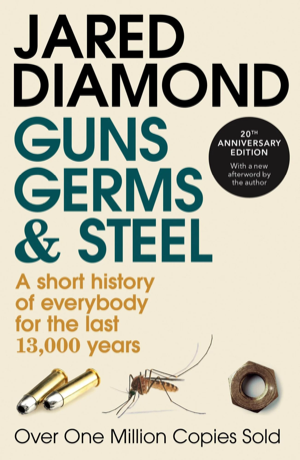
Guns, Germs, and Steel discusses why Eurasian and North African societies in particular were the ones that emerged as more powerful and were able to colonize and dominate other parts of the world for so long. To explain this, the author comes up with various theories of why the geographical features of Eurasia made many things easier for societies there. As such, it argues against the idea that Eurasian societies did well because of inherent or supposed intellectual advantages, and instead considers much lower-level features, such as the geographical shape of continents.
While the book title gives a small spoiler on what kind of things the book discussed, it is far from exhaustive. An argument that I found particularly interesting was that it is a huge advantage of Eurasia that it mostly stretches from West to East, whereas the Americas mostly stretch from North to South. The major axis being West to East means that climates are more similar, which makes trade and exchanging plants, seeds, and animals much easier.
I would absolutely recommend the book to anyone that is curious to get a better sense of how the world developed the way it did. Another great reason for reading the book is that it makes it very clear that sometimes huge advantages can be rather hidden and appear subtle before taking a closer look.
14. – 19. Harry Potter and the Methods of Rationality
14. The Methods of Rationality – HPMOR 1/6 ☆
Harry Potter and the Methods of Rationality (HPMOR) is a Harry Potter fan fiction, written by Eliezer Yudkowsky, a decision theorist and artificial intelligence safety researcher. In the books, Yudkowsky makes use of the Harry Potter universe to explain many ideas of how one ought to make rational decisions and how to follow the scientific method.
While much of the universe resembles the actual Harry Potter universe, in HPMOR, Harry Potter’s aunt ended up marrying a different person, an Oxford professor. In contrast to the actual HP books, Harry Potter in HPMOR grows up in a loving home with parents that are obsessed with science. Harry Potter thus reads a lot and becomes a child prodigy.
When he receives his invitation to Hogwarts, Harry Potter then uses the scientific method to try to understand magic. Instead of accepting “it is just magic” as a reason for why spells work, like the rest of the magic world, he tries to perform experiments and uses scientific reasoning to get to the bottom of things.
The HPMOR series spans 6 books, making up a similar number of pages to the actual Harry Potter series. I absolutely loved all of them. Not only can one learn a huge amount of things from the book, I also found the plot to be genuinely interesting and engaging.
I ended up writing reading notes for all the books.
15. The Legion of Chaos – HPMOR 2/6
It is difficult to summarize books 2 to 6 of a series without giving away spoilers to someone that has not read the first book of the series. Thus, I will keep the summaries for these books rather short, just describing a few cool scientific concepts discussed in each book.
In Legion of Chaos, Harry Potter pursues more extracurricular activities, in particular a series of mock battles to learn the art of fighting with magic. The author uses this plot to discuss many concepts around group coordination, e.g. the Machiavellian intelligence hypothesis, zero-sum games, mutual modeling and some classic game-theoretical problems.
16. The Shadows of Death – HPMOR 3/6
In The Shadows of Death, Harry Potter pursues a rescue mission which requires him to do a particularly good job at decision making. In this context, constrained optimization, consistent utility values and some popular psychology experiments, such as the Stanford prison experiment and Milgram experiment, are discussed.
17. The Phoenix’s Call – HPMOR 4/6
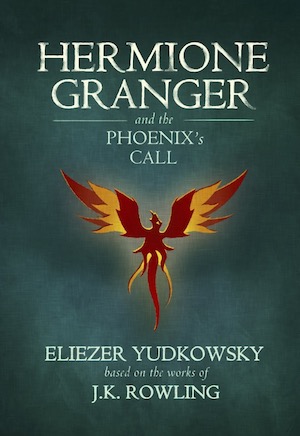
In The Phoenix’s Call, more concepts around rational decision making are discussed, e.g. Pavlovian association, replacement values and many concepts of Bayesian reasoning.
Besides these concepts discussed, something I really enjoyed in the HPMOR books is Harry Potter as a character. He is not only smart and driven, but is a character with very high agency: when something does not go well, he actively tries to look for solutions in a “go-getter” manner that makes me as a reader rather motivated to tackle things in the same manner.
18. The Last Enemy – HPMOR 5/6
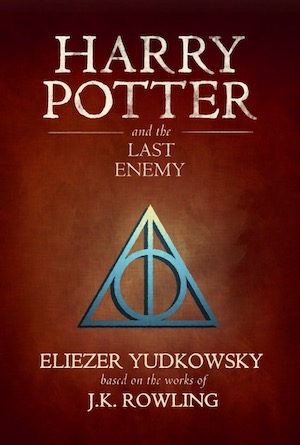
In The Last Enemy, the stakes of the story are raised. Harry Potter needs to deal with this by carefully considering Bayesian evidence. He also discusses some fun concepts, such as egocentric bias and the law of the excluded middle.
19. The Mirror’s Stone – HPMOR 6/6
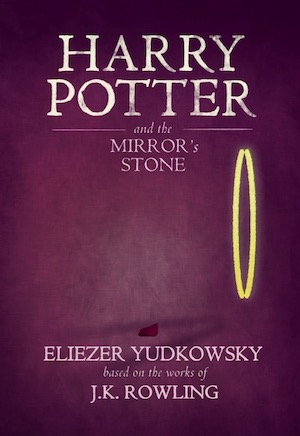
The Mirror’s Stone wraps up the HPMOR series, after an astounding 2,100 pages. The book again discusses many interesting concepts, such as Vinge’s Principle.
I’m super happy that I read the whole HPMOR series. I learned a huge amount of things from it. Besides that, it was also a particularly fun read, with an interesting plot and a main character that I found genuinely inspiring.
20. – 21. Rationality: From AI to Zombies
20. Map and Territory – Rationality 1/6
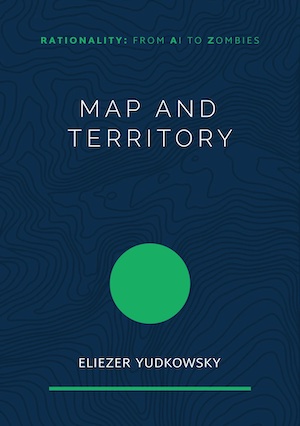
Besides HPMOR, Eliezer Yudkowsky wrote another series of books on rational decision making, Rationality: From AI to Zombies. The work covers six books, each consisting of many individual essays, which discuss various biases and rules for good decision making.
Map and Territory discusses topics such as what is truth, how to align your map with the actual territory, and how to use Bayesian reasoning.
21. How To Actually Change Your Mind – Rationality 2/6
The second volume, How To Actually Change Your Mind, on the other hand discusses topics around how we can get our brains to deal with new information. Whereas we should be seeking to figure out the truth, we are often overcome by our desire to be right and our own, personal biases. The book discusses why this is the case and how to deal with these biases.
I found both books on rationality to be really interesting, with lots of sensible ideas. Reading Yudkowsky’s thoughts sharpens one’s own thinking process and is a great way to become more introspective.
However, after these two books, I decided that I had read enough about rationality and decision making for this year. Six HPMOR and two Rationality books are a huge amount, with often overlapping ideas. While the other four Rationality books were on my reading list for 2025, I ended up dropping them, and focused on other genres afterwards.
22. The Telomere Effect
Telomeres are protective caps at the end of chromosomes. They protect chromosomes from unraveling, a bit like how shoelaces have protective pieces of plastic at the end to make them keep their shape. As such, telomeres ensure that cell division works without damaging DNA, and are thus an important facet of health.
Elizabeth Blackburn is a biologist that is one of the pioneers of telomere research. In this book, she provides a biological explanation of what telomeres are about and why they are important. Then, she also gives practical advice on how to protect one’s telomeres, covering diet, exercise, managing stress, and related topics.
I found the book to be an interesting read. Though a lot of the advice overlaps with other health advice, it is interesting to read how it impacts telomeres particularly.
23. – 26. Sally Rooney’s novels
23. Normal People – Sally Rooney 1/4 ☆
Normal People tells the story of Connell and Marianne, two teenagers that lead rather different lives, but that have a lot of chemistry with each other. They fall in love and become a couple, but of course not everything is as easy as it would be in a perfect world. Initially, one of the two characters treats the other fairly badly in some ways. Despite them being in love and having a special relationship, it kills things between them. However, the two characters keep appearing in each other’s lives, and the book follows them over many years.
Connell and Marianne’s connection and chemistry is undeniable, but the communication between them can be equally bad. Often, both characters want the same thing, but do not manage to properly communicate their feelings, for example because of pride or a fear to be hurt. As a reader, that can be really frustrating, but there are also many lessons to be learned from following their story, both in terms of how to communicate but also in terms of how to set boundaries and what behavior to accept from other people.
What made the book one of my absolute favorite reads of the year is that Sally Rooney, the author, is just incredibly good at describing relationships and interpersonal aspects. It’s just so intriguing to follow the story along and to see the dynamic described, though it can often also be heartbreaking. After reading Normal People, I decided to also read Sally Rooney’s other books this year.
On a more personal note, I think there are a few different things one can take away from Normal People. Personally, though I’m not proud to admit, I saw some parts of myself in Marianne’s character, in terms of accepting a lot of toxic behavior for what looks like a special connection, and needing to learn that one needs to set boundaries of what behavior is okay. That’s a valuable and important thing to learn, though it can be a painful process.
24. Conversations with Friends – Sally Rooney 2/4
After having liked Normal People so much, I decided to read all of Sally Rooney’s book, in chronological order. Conversations with Friends is her first book. Just like Normal People, the book goes deep into personal relationships, and Sally Rooney is just absolutely brilliant at describing the dynamics in them.
More concretely, Conversations with Friends tells the story of two best friends, two literature students in Dublin, who end up meeting an elder couple. Somehow both friends develop deeper relationships with wife and husband of the couple respectively, resulting in a bit of a love rectangle.
The book was super interesting to read, and I really enjoyed following along to see how the relationships untangle. However, I found it much harder to relate to the characters in the book as it describes a much more complicated setup than Normal People does.
25. Beautiful World, Where Are You – Sally Rooney 3/4
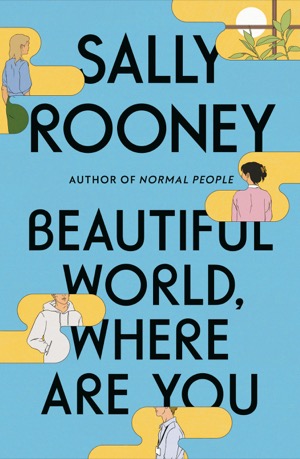
Beautiful World, Where Are You forms a clear pattern with Normal People and Conversations with Friends: the main characters again studied literature in Dublin and Sally Rooney does a superb job at setting up characters and describing the relationships between them.
Setting aside the main plot, something I really liked in the book was how the two main characters keep writing each other letters, telling each other about what happened in their life. I enjoyed this for multiple reasons. First all of, interleaving the letters with the third-person narrator, is super intriguing to follow along as one gets to see the divergence of how the people involved understand the same things very differently.
However, I also found it a really sweet practice to write letters in today’s day and age. This inspired me, and I’m also now exchanging letters with a couple of good friends that live far away from me.
26. Intermezzo – Sally Rooney 4/4
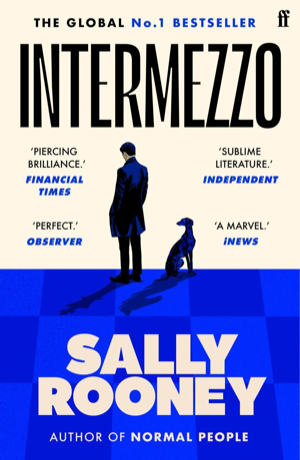
Intermezzo is Sally Rooney’s fourth book and again covers interesting relationships, of which Rooney does a super job describing. However, besides this, the book is probably the one that stands out the most from the four books, as the main characters are brothers with a large age difference, very different personalities, and a troublesome relationship.
Ivan, the younger brother, is autistic and a brilliant chess player. He ends up meeting, and falling in love, with a significantly older woman. Peter, the older brother, on the other hand is dating a much younger woman, with a dynamic where it is not really clear if they genuinely like each other or simply exchange love for money. At the same time, Peter is incredibly dismissive of Ivan’s relationship. To make things more complicated, Peter is still in love with his ex-girlfriend, that ended their relationship because she was in an accident and does not want to be a burden to Peter.
All of this makes for plenty of relationship trouble, which is amplified by broken communication. For me, Intermezzo was Sally Rooney’s best book, besides Normal People. It’s interesting to follow along how the relationships unfold, and there’s a lot to learn about good communication in the process.
27. Slow Productivity
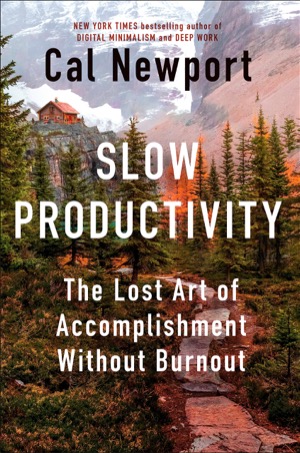
Cal Newport is a computer science professor and productivity expert. A few years ago, I read Deep Work from Newport, and really enjoyed it.
In Slow Productivity, Newport argues that doing fewer things and working at a natural, sustainable pace while relentlessly focusing on quality leads to much better results than overexerting oneself in the short term and burning out on too many projects and short deadlines.
A piece of advice I liked in particular was the suggestion to introduce seasonality into one’s work: rather than working at the exact same intensity all the time, we should aim to do targeted sprints interleaved by periods of rest and more free-flowing exploration. This is inspired by how people before civilization also did not do the exact same thing all year around, but had a variety of flows based on seasons.
I have to admit that I was a bit skeptical before reading the book, in the sense that there are so many productivity books out there and they get somewhat repetitive after a while. However, I was pleasantly surprised by the book in the end and took some valuable pieces of advice from it.
28. The Optimist: Sam Altman, OpenAI, and the Race to Invent the Future
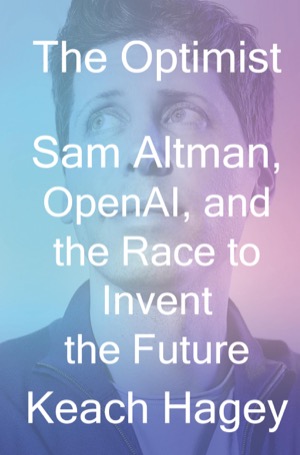
Earlier in the year I had read a WSJ article about what happened inside of OpenAI when Sam Altman got fired. It turned out that the article was an excerpt of the author’s upcoming book, The Optimist, which was released later in 2025.
The book is a biography of Sam Altman, though large parts of it also cover OpenAI as an emerging organization. I found the book to be super interesting to read. Sam Altman is an interesting personality, with many impressive achievements, and a set of interesting careers. I also really enjoy books where you learn about how things actually happened, and this book was great for learning more about how YCombinator and OpenAI came to be successful.
29. The Parable of the Sower
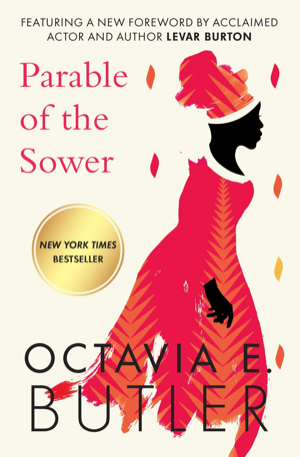
The Parable of the Sower is a science-fiction novel that tells the story of Lauren Olamina, a 15-year old girl that lives in a gated community in a dystopian world in which society is starting to collapse. In this world, Lauren ends up creating a new religion, which postulates that “God is Change”. As the only constant in this dystopian world is change, it is important to embrace and shape it, rather than to be afraid and ignorant of the changes that are about to come.
Initially, I was not sure how much I would enjoy the book. The first few chapters are rather depressing, as all you read about is how society keeps collapsing further, and how horrible things are happening all around. However, I really liked the main character. She has a very proactive attitude at addressing problems rather than ignoring them, and it was really intriguing to read about how a religion can be organized around the concept of change.
Nick Hornby’s novels
30. High Fidelity – Nick Hornby 1/3
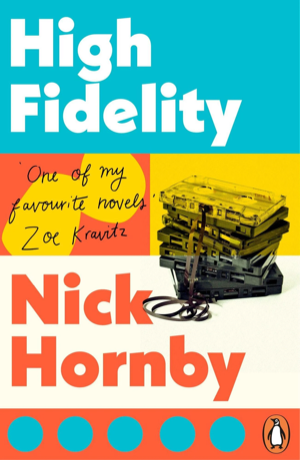
High Fidelity tells the story of Rob, a record store owner, whose relationship just ended because his girlfriend left him for their neighbour. As a result of this, Rob is both miserable and is trying to re-evaluate his life. He also meets some new people along the way and tries to fix his previous relationship. Though the plot sounds like a rather sad one, the book is actually really funny.
This is the second time I read the book. The first time was in English class, many years ago. I remember that this was one of the few books I had to read in school that I actually enjoyed. This time I enjoyed it even more.
31. About A Boy – Nick Hornby 2/3
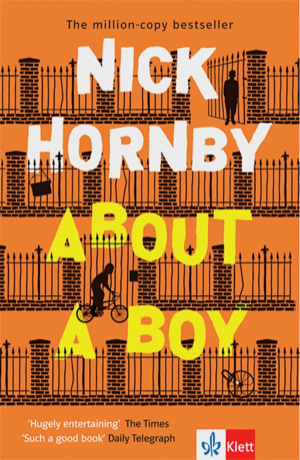
After enjoying High Fidelity, I decided to read another book from the same author, About A Boy, which was also turned into a popular movie.
The plot of the book is hard to describe because it sounds absolutely horrible. Will Freeman, the main character of the book, somewhat incidentally figures out that single women might be easier to date. He does not actually have a kid himself though. Hence, he decides to make up a son, just to have an easier time at dates, something which of course can only work for a few dates, unless you hire someone else’s kid.
While the plot and behavior are despicable, there is a lot of character development happening across the book and the relationships are interesting to analyze. Furthermore, the book is really funny and written in a light-hearted way. I must admit though that at times I had some trouble enjoying the humor given that it is pretty messed up to invent (and then hire) a kid because you think it makes it easier to get some initial dates.
32. State of the Union – Nick Hornby 3/3
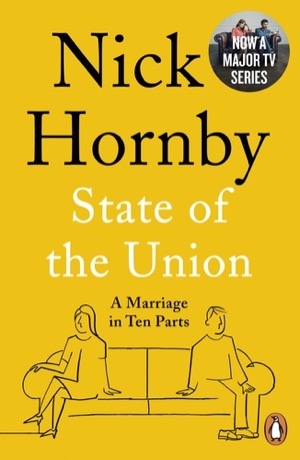
After High Fidelity and About A Boy, State of the Union was the third book of Nick Horny that I read this year. The book follows Tom and Louise, a married couple whose marriage is falling apart and that decides to go to couple therapy. Each chapter of the book describes how Tom and Louise meet in a pub just before their weekly therapy session starts.
I really enjoyed the setup of the book. It is fun to see week after week how the story and relationship develops. The book is a quick and easy read, but one that I enjoyed a lot.
Also, if one ever gets to the point where one does not live together anymore but goes to couple therapy to fix things, it does seem like a rather good idea to meet for a drink before every therapy session.
33. Breath: The New Science of a Lost Art
In 2023, I had already read Breath. It had a large impact on my life, making me change to nasal breathing, which in turn led to a lot of ways I feel better from a health perspective than some years ago.
Since the book had such an impact on me, I decided to re-read it, pretty much exactly two years after I first read it. It is still a really great book! Some of the advice I had already forgotten about since I first read the book, so it was good to re-read. Other advice I’ve been following for the last two years, and it was really motivating to see what an impact it has made.
34. Table for Two
A few years ago, I read, and really enjoyed, A Gentleman in Moscow, another book from Amor Towles. So when I saw his new book Table for Two appear in bookstores, I had to read it.
The book consists of short stories, all playing in New York City, and a novella, playing in Los Angeles. The short stories span different settings and are all incredibly well written. A couple of them also made a lasting impression on me as I occasionally recall them.
The novella continues the story of Rules of Civility, which I had not read before. While it was not necessary to have read it before, the novella is quite different to the short stories. I found it enjoyable to read but I probably would not have bundled it with the short stories that are somewhat different in nature.
35. Lifespan
David Sinclair is a Harvard professor that researches aging: why we age and how to prevent aging. Lifespan is his pop-scientific book describing the aim and results of his research.
At the core of this is the idea that aging is not some inherent process that we cannot control but that it is a disease that should be measured and treated just like any other disease. However, Sinclair considers it to be the most serious disease in that it affects absolutely everyone and leads to many other diseases down the road.
I found the book to be an intriguing read. The take on aging was novel to me and it was interesting to read about his, and other, theories of why the human body ages, and what we can do about it.
Siddhartha Mukherjee’s books on biology
36. The Emperor of All Maladies ☆ – Siddhartha Mukherjee 1/3
Cancer is the deadliest disease of our time, jointly with heart diseases. The Emperor of All Maladies is a biography of cancer, covering chronologically how it was first discovered, how people started to develop an understanding of it, and then engineered treatment methods, initially crude ones but then increasingly more sophisticated ones, against it. As such, the book spans many centuries of discoveries.
The author of the book, Siddhartha Mukherjee, is a doctor, specializing in cancer. As such, the book also contains detailed biological explanations of how cancer, and its treatment methods, work. However, Mukherjee is also an absolutely incredible writer, turning the book into an intriguing read. I’m not surprised that he won the Pulitzer Prize for the book.
Something I in particular gained an appreciation for while reading the book is how long cancer a history cancer actually has, and how significantly the treatment methods of it have improved, even in recent years. Before reading the book, my take would have been that it is a really new disease (or set of diseases) and that we do not yet really know how to treat it. However, there has been absolutely astonishing progress in cancer medicine in recent years. It’s not perfect of course and there are many cancers we cannot treat, or prevent, well yet, but there are equally many success stories, and so while treatments are clearly not sufficient yet, there is a lot of hope for even more advancements in the future.
37. The Song of the Cell – Siddhartha Mukherjee 2/3
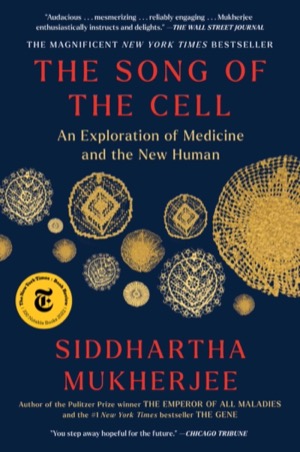
After reading The Emperor of All Maladies, I decided to read all of Mukherjee’s books this year. They all follow a similar setup: they describe some biological phenomenon (cancer, cells, genes) in a historical form, describing mostly chronologically what, and how, people figured out certain things. This is super interesting to follow along, in particular as you get to learn about how science developed. However, one also learns a huge amount of biology along the way.
The Song of the Cell, in particular, tells the history of cellular biology: how people figured out that there is a thing like cells, how the biology theory of them developed, and how that gave rise to new ways of approaching medicine. It’s a super interesting read that one can learn a lot from. Also, the title of the book is just absolutely beautiful.
38. The Gene – Siddhartha Mukherjee 3/3
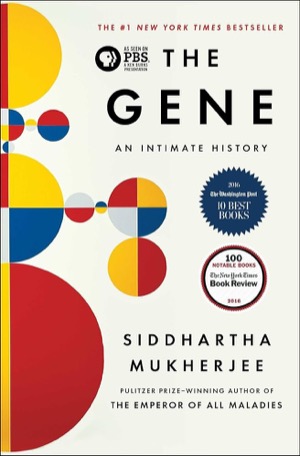
The Gene is Mukherjee’s third book, covering the history of genes: how people first assumed there might be some underlying mechanism to heredity, how the idea of genes was devised, how some interpretations of heredity lead to some incredibly dark periods for humanity, and how gene research drives science today.
The book also tells a rather personal story of Mukherjee’s family, in which several members suffer from psychological problems, something which the family assumes might be a matter of heredity. To investigate this further, the author decides to learn more about genes, and their history. While this of course a rather sad reason to learn about this, I found it moving to read about and an inspiring reason to write the book.
All in all, the book was a great read and I really enjoyed it. Though after having read these three, rather thick, books on biology and the history of biology, I was really in the need of reading something else again.
39. Rules of Civility
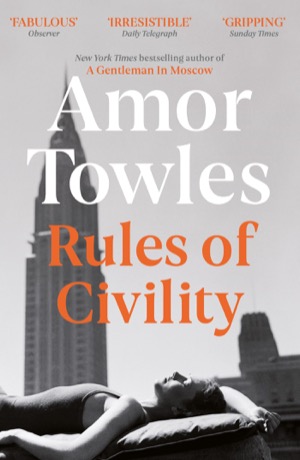
Rules of Civility is the third book of Amor Towles that I read. Set in New York City in 1937, and the years following, it covers the two stories of two young women and their life in the city, in terms of their emerging careers, dating, and other relationships that develop over time.
I read the book while I was spending a few weeks in New York City at the end of Fall 2025. That was a really great time to read the book, as I was able to feel its vibe a lot better and kept reading about places in the city that I already visited, or wanted to visit afterwards.
The book is written in an incredibly elegant fashion, and I really enjoyed the description of the relationships. There’s also a particular quote from the book I keep having to think of:
By the Summer that Val and I had begun seeing each other, we were still in our thirties and had missed little more than a decade of each other’s adult lives; but that was time enough. It was time enough for whole lives to have been led and misled.
I turned 30 not too long ago before reading the book, and the quote is one that hits hard when I reflect on life.
40. Welcome to the Hyunam-Dong Bookshop
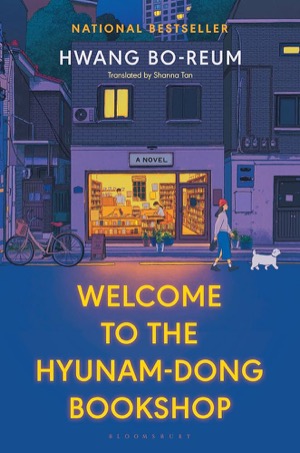
Welcome to the Hyunam-Dong Bookshop is a book that I kept seeing in book stores, and eventually decided to read. It tells the story of Yeongju, a woman that burns out at a corporate work and decides to open a book store. While running a book store is not likely to be a financially savvy decision, it makes her happy, and she thus decides to do it. The book then tells the story of her and the other people that visit the book store or work their part time.
Besides this being an interesting story to follow along, the book also discusses deeper questions: what should the meaning of work in our life be and how does society value work vs. how should it do so ideally. However, it also covers some literary aspects of what should a book store stock and what does good writing look like. Both were cool to read about.
All in all, I found the book to be an enjoyable mix of different topics. I also really appreciated the general vibe of the book: do in life what makes you happy and do not be obessed with just earning a lot and working hard for the sake of working hard.
41. Seize the Day
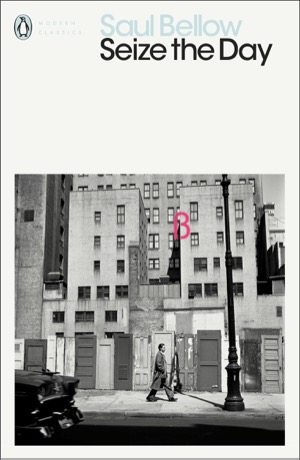
Seize the Day tells the story of Tommy Wilhelm, who after a failed career in Hollywood tries to navigate his life in New York City, which is genuinely quite messy: he is in the process of being divorced, does not see his kids often, has financial problems, and a rocky relationship with his father. The book starts off with Wilhelm deciding to invest his last life savings in a questionable manner by accepting an offer from his psychologist. That of course does not make things any less messy.
The book then follows Wilhelm as he tries to fix things. It is an easy and straightforward read, and I found the story engaging, though at times it was also rather frustrating to see Wilhelm’s poor decisions without being able to intervene myself.
Books in German
42. Das Kind in dir muss Heimat finden
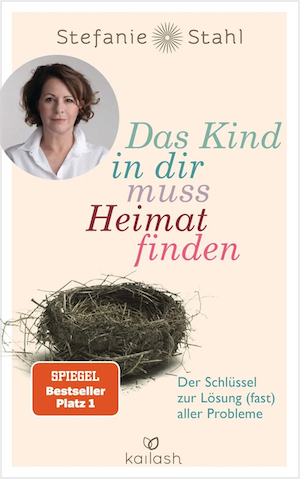
Stefanie Stahl, the book’s author, is a psychologist. In Das Kind in dir muss Heimat finden, she discusses how our childhood impacts our personality and beliefs. These in turn impact how we behave as adults today and how we deal with relationships and conflicts.
The book provides lots of practical guidance on how to analyze the effects of our experiences, as well as some exercises for the reader. I thought it was a really neat book with some great advice.
43. Starke Füsse
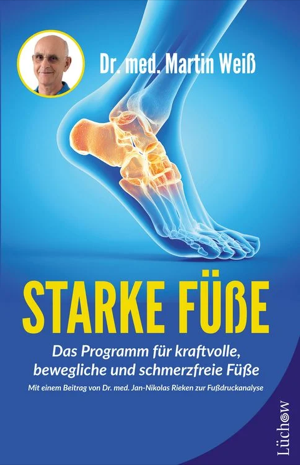
Our feet are core to many of our activities, from walking to running and many other forms of exercise. However, the muscles of our feet (as opposed to the muscles of the legs) and proper form of using them are often underlooked. This book covers the anatomy of feet and their muscles, and how to systematically strengthen and take care of them.
It might sound like a really specialized book, but it is both an easy and worthwhile read, and I took some good habits away from it.
Reflecting on the year, I ended up reading a lot more in the first half of the year. Particularly the last couple of months of the year were too stressful, and I did not get to read too much unfortunately. For 2026, I’d like to read more consistently again. It doesn’t have to be exactly a book a week, but it would be nice to keep the routine going at a somewhat even pace, even if slower.
On a side note, this was the first year where LLM-driven editors (via Cursor) significantly helped me with the writing of the blog post, from finding and inserting all the book links, to making sure the book images are in the right formats and resized correctly. Pretty neat!